One courageous quote
“If you don’t know where you’re going any road will get you there.”
- Cheshire Cat, from Alice In Wonderland

One personal story
The Embarrassing Event At Church In 2003
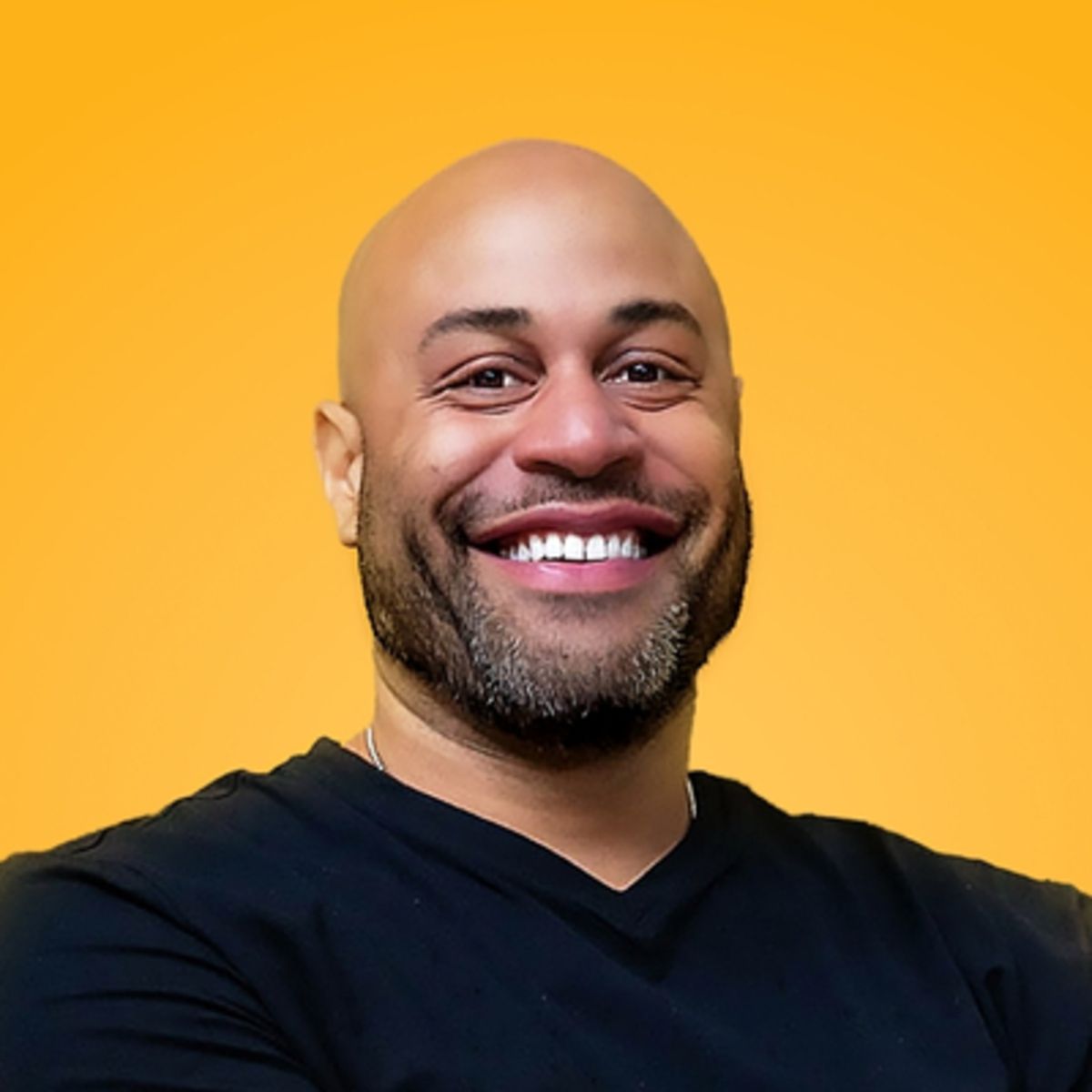
"Jonathan, what happened to your hair?"
I was nineteen years old, home from college break, sitting in a church pew with my mom, when a woman in the pulpit looked out at the congregation and asked me this; in front of everyone.
I was mortified.
I wanted to disappear into the floor.
I sat there quietly, frozen in shock, fear, anger and embarrassment.
I managed to fake a smile and laugh like I didn’t care.
In August 2002, I enrolled at California State University, Chico with a full head of hair.
By January 2003, I’d started losing my hair.
And for several years, I was in denial.
I tried fighting it with everything I had.
I started wearing hats everywhere.
I bought every product I could find; in an attempt to slow down the balding and hopefully regrow my hair. Creams, lasers, oils and magic potions from the back of magazines.
You name it, I tried it.
None of them worked.
After several years of fighting it unsuccessfully, one day I finally said “fuck it”, and stopped at Walgreen’s on my way home from work.
I went in, bought a Mach 3 razor, some Gillette shaving gel and went home to take it all off.
I was 24 years old and I finally accepted the fact that I was ready to accept the uncomfortable truth: I was bald and there was nothing I could do about it.
Running from my reality only made it worse.
With the last stroke of the razor, I immediately felt lighter, freer, and more at peace.
That day changed my life.
Why was I so reluctant to accept the fact that I was losing my hair for 5 years?
Fear.
I feared not being physically attractive to women.
I feared being seen as not good enough.
I feared being made fun of.
I had a several unconsciousness beliefs that preyed on my insecurities; and all insecurities are rooted in fear.
But here’s the thing, my fears didn’t protect me from reality; they just made reality worse.
Instead of finding reasons to be embarrassed by being bald, I found reasons why I could be proud.
If Michael Jordan, The Rock, and DMX didn’t let being bald stop them from being successful, why should I let it stop me?
Once I accepted reality, I gained a certain power.
I started to operate from a state of more confidence; and people noticed.
I was no longer hiding from my reality. I embraced it.
And as a result, my reality got better.
I still made friends. I got invited to events. I got dates with attractive women.
Everything I had feared was False Evidence Appearing Real.
But I could only discover that by accepting the truth. Not fighting it. Not hiding from it. Accepting it...and then acting from that honest place.
That was my first real education in the cost of delaying an uncomfortable truth. The shame, the embarrassment, the shrinking, none of it came from actually being bald.
All of it came from refusing to accept being bald.
This is what helped me realize the importance of understanding the role our beliefs play in our lives.
I had an epiphany: our beliefs are the maps we use to navigate the terrains of reality.
Every belief we hold is a map. It's our brain's best attempt to represent reality based on what we’ve experienced, what we were taught, and what we’ve absorbed from the world around us.
No matter how good our map is, it is an abstraction. A visual aid. A representation of reality designed to help you navigate, not a substitute for reality itself.
Alfred Korzybski, the philosopher, put it simply: "The map is not the territory."
And just like any other map, some are more useful than others.
Why Our Beliefs Need Constant Updating
The difference between a good map and a bad one isn't about intention.
It's about accuracy.
The difference between a paper map from 1995, a CD-based GPS from 2005, and Google Maps today is not just technology. The technology is a means to an end, not the differentiator itself. The differentiator is how accurately and how quickly each one reflects reality.
Road closures. Accidents. Rerouting.
The best maps update constantly because reality changes constantly.
Think about how many people were sold a map that said: go to college, work hard, and you'll be financially secure. That map worked; for a specific terrain, in a specific era. Today, many graduates follow that map faithfully and find themselves tens of thousands of dollars in debt, in a job market that looks nothing like what they were promised.
The terrain shifted. The map didn't.
As the Cheshire Cat from Alice in Wonderland said, if you don’t care where you’re going, then any road will get you there.
But you do care where you’re going.
That’s why you’re reading this.
You want to get the most out of life.
That’s what DailyCourage is all about.
The only way to successfully navigate the actual terrain is to update the map. And updating the map requires intellectual courage — the willingness to ask: "What do I belief to be true and is it actually true?”
That courage is not common. Our ego is deeply invested in our maps. To update the map it often requires to admit we were wrong. And for many people, being wrong feels more dangerous than staying lost.
The Super Skill School Never Taught Us
In the era of AI, the opportunity cost for having an outdated map is higher than ever.
We simply can’t afford to have inaccurate views about the most important things in life.
The super skill that school never taught was to frequently update our maps.
This requires consistently interrogating our beliefs, changing them, and taking action on the new information.
The irony is this actually how machine learning works.
A computer program is given a training set of data, and a mathematical model to make a predictions with. It then produces an output and evaluates how closely that output matches with the ideal outcome in reality. It then takes that output and uses it as an input to update the model. It then repeats this exercise, millions of times.
One might say: machines have an advantage over humans because they don’t have egos.
Seriously, think about it.
Yes, machines have more advanced processing power, but the processing power is only useful because the machines are willing to update their beliefs. That’s what makes them smarter.
What makes some people stupid is their reluctance to update their beliefs, even when presented with new data.
When we ignore our inherent cognitive biases, and fail to seek out ways to improve our thinking, we unnecessarily inflict pain on ourselves.
In the era of AI, where the pace of change is accelerating, where the gap between what was true five years ago and what is true today grows wider by the month, the ability to rapidly accept and act on uncomfortable truths is a competitive advantage.
It's a life strategy.
The people who get ahead aren't necessarily the most talented or the most credentialed. They're often the ones who can look at reality clearly and update their map faster than everyone else. They take the red pill before they're forced to. They don't wait until the terrain makes the map obviously, painfully wrong. They’re the ones that have the courage to constantly update their beliefs take action, in as short of a timeframe as possible.
In the word’s of renowned Physics Professor Richard Feynman:
“Never confuse education with intelligence. Intelligence isn't the ability to remember and repeat, like they teach you in school. Intelligence is the ability to learn from experience, solve problems, and use our knowledge to adapt to new situations.
One reflective question
Here's your reflection for the week:
Is there something you already know you should do but haven’t yet acted on it? Maybe about a relationship? A decision? A situation at work? When did you first have conviction on it? You knew what to do but you didn't act on it; why? Write down what you knew, when you knew it, and what stopped you from acting. That gap between knowing and doing is where opportunity cost lives.
One weekly challenge
Here's your challenge for the week:
Think about your current maps. Pick ONE belief to interogate and update. Maybe it’s about politics. Maybe it’s about human behavior. Maybe it’s about the economy. Find ONE thing that you developed a belief around a long time ago and stress-test your beliefs about it. Is it still true today?
With courage,
Jonathan

How did today’s message resonate with you?
1
